A Winter Afternoon Built Around a Window and a Warm Drink
A winter afternoon by the window becomes easier to enjoy with a comfortable seat, a familiar warm drink and simple prompts for noticing changing light.
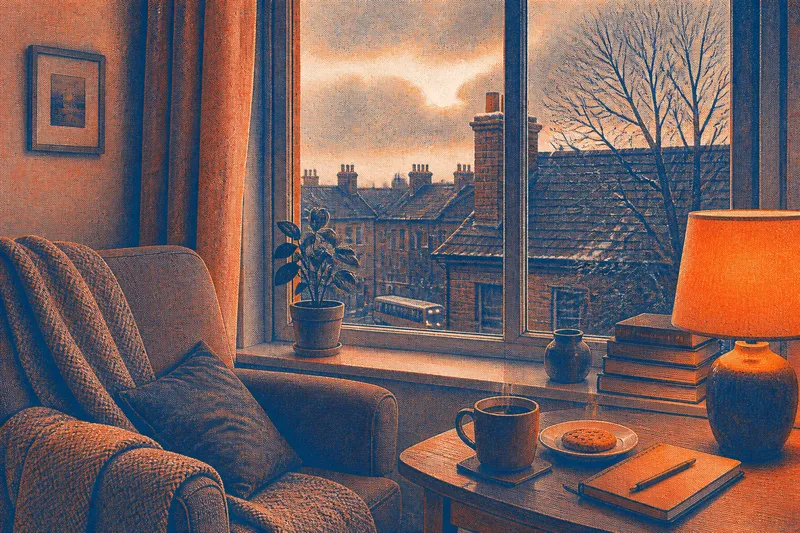
A winter afternoon by the window can feel distinct without asking you to improve the weather or rearrange the house. For a winter afternoon by the window, a comfortable seat, a warm drink and one observation prompt are enough to give the view your attention.
Say you have a Saturday in a flat where the sitting-room window faces rooftops. It is cold outside, the sky is clouded, and the day has no fixed plans. You draw the curtain back, clear a small patch on the sill and place a chair at an angle that lets you look out without craning your neck. The expected result is simple: a view you can attend to comfortably, rather than a scene assembled for its own portrait.
Which window is comfortable to sit beside?
A wide view is not essential. A slice of sky, a garden fence, a neighbouring wall or a tree beyond the glass can offer details to follow. Choose somewhere you can sit without blocking a useful route through the room.
In this invented flat, the window looks towards roof tiles, a chimney and a bare street tree. The resident moves the chair back when a draught comes through the frame, then switches on a lamp because the room is dim. The observable result is a warmer seat and enough light indoors; daylight need not win a contest.
What should you prepare before sitting down?
Choose a drink you already enjoy and can make without turning the kitchen into the main event. Tea, coffee, hot chocolate or a warmed non-caffeinated drink will do. Put the mug on a stable table or tray, away from books, fabric and the edge of the sill.
For the imagined afternoon, the resident makes a pot of black tea, pours one mug and puts a plain biscuit on a small plate. The kettle and used spoon stay in the kitchen. The expected result is that the drink is ready before the resident sits, with no parade of props to carry back and forth.
Let the drink cool until it is comfortable to sip. There is no need to count sips or consult a timer. A warm mug can simply give your hands something to do while your eyes follow the view.
What can you notice without inventing a story?
Choose one question that invites observation rather than a clever answer. Try “Where does the light settle?”, “What has moved since I sat down?” or “Which detail is easiest to overlook?” Leave the question open; you can change it if the view gives you nothing to follow.
In the invented flat, the resident asks where the light settles. At first, the rooftops look flat beneath the grey sky. Later, a pale patch appears on the chimney, then thins as a cloud passes. The bare branches show more clearly against the brighter sky. The visible result is a sequence of small changes, not a dramatic event.
A chimney’s pale edge, a dark gutter line or a branch shifting in the wind is enough to hold attention. You do not need to identify every bird or turn the view into a poem. If one detail catches your eye, stay with it; if it does not, look for another.
How can the afternoon take shape without a schedule?
Let the afternoon move through loose phases: settle into the chair, make the drink, choose a prompt, then look out for a while. Take breaks to sip or glance around the room. Later, check what has changed. These are options, not appointments.
In the invented scene, the resident starts while the rooftops are easy to distinguish. The tea cools, a bus passes below the window and the cloud cover shifts. The resident does not record each event. The observable result is a few details that mark time passing.
If you want a trace, write one sentence on scrap paper: “The chimney held the last pale light.” A photograph is optional, and may be less useful if the glass reflects the room. What is not worth the effort is adjusting cushions and camera angles until the afternoon looks organised by a magazine.
What if the view is dull, dark or interrupted?
When thick cloud flattens the light, shift your prompt to movement, texture or reflection. Follow a branch against the sky, water on the glass, a brickwork pattern or the brief change in colour on a wall as a car passes. The view does not owe you a revelation.
When darkness arrives, keep the room comfortable and notice how the window’s reflection changes. A lamp may appear in the glass, layered over the rooftops beyond. Close the curtains when you want privacy or warmth; leaving them open is not the price of admission.
If the window faces a wall, look for a changing quality, such as the wall’s colour as daylight fades. In the invented flat, rooftops and a tree provide the view; in another room, a courtyard or neighbouring building could serve just as well. The useful distinction is between a view you can comfortably attend to and one that makes you strain.
Which small questions help with a winter afternoon by the window?
What is a good observation prompt for a winter window?
Choose a question you can answer by looking, such as “Where is the brightest patch?” or “What moved since I sat down?” A visible detail is enough; you do not need to write anything down.
Should I make the drink before sitting down?
Prepare it first if another trip to the kitchen would interrupt the pause. Keep the mug on a stable surface, away from the sill’s edge.
What can I look at on an overcast afternoon?
Look for contrast, movement or reflection rather than direct sunlight. Bare branches, wet glass and shifting cloud brightness can give your eyes something to follow.
Does this need to become a regular ritual?
No. It can be a one-off way to spend a particular afternoon, or something you return to when it suits you. Repeating it is optional; the window does not keep attendance.
What does this winter window pause leave in memory?
In the invented situation, the resident finishes the tea and moves away from the window. The result is not a transformed room or a record of a productive day, but a memory of the chimney catching light, the bare tree shifting and the mug warming a hand.
For your own winter afternoon by the window, choose a view you can sit beside comfortably, make a drink you already like and ask one question about what you can see. The light may change, or nothing may catch your attention at first. Either way, a useful detail can be small: notice where the pale edge rests, then let the next part of the day begin when you are ready.