How to Make a Weekend Album into a Family Keepsake
A weekend album can turn scattered photographs into a family story. Choose a format that suits the event, then arrange pictures so the occasion is easy to follow.
How do you make a weekend album into a family keepsake? Start by choosing photographs that show who was there, what happened and which small detail made the day distinct. A paper book, a shared digital collection or a small box of prints can all work; the useful part is the sequence.
A photograph of the packed picnic can lead to the blanket spread on the grass, then to muddy shoes by the door. Each image gives the next one context. The album becomes an account of the day, rather than a heap of camera-roll fragments.
What memory are you trying to keep?
Begin with the event, not the product. A walk to the allotment may need a few photographs and a note about the first ripe tomatoes. A reunion with relatives from different towns may call for names, captions and pictures from people who were not holding the camera.
Look for details that could otherwise fade: paper napkins on the kitchen table, handwritten directions, or a child asleep in a coat after the train journey. Such images can place a memory more precisely than another posed smile. Choose details that explain the occasion to someone who was there, or to a relative who was not.
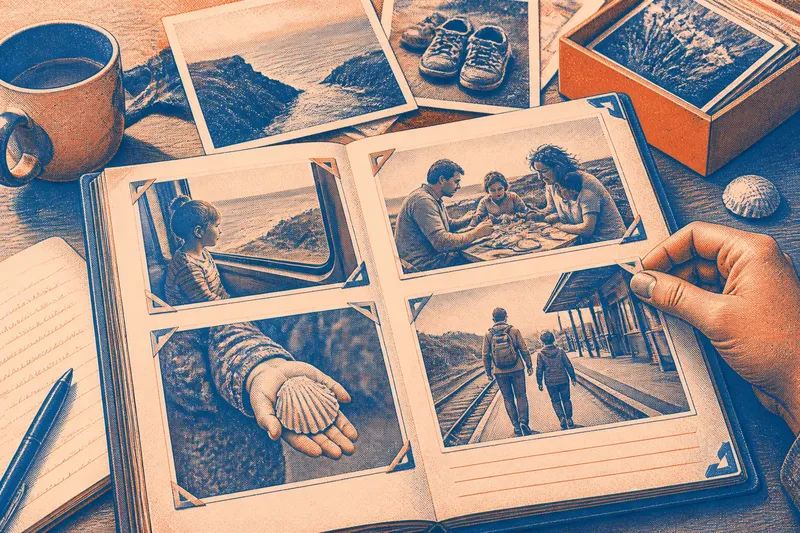
Say you have pictures from an invented family visit to a seaside town: a train-window view, a windblown lunch, a shell chosen for a grandparent and a quiet walk back to the station. Put them in that order and add a caption naming who received the shell. The result is a small narrative with a departure, a shared moment and a return.
Which album format suits your family?
A paper album suits a household that likes to browse together and write notes beside photographs. Choose photo-safe pages and use photo corners or an adhesive intended for photographs, rather than ordinary tape. Leave room for captions; an overfilled book is awkward to turn and harder to add to.
A digital album suits relatives who live apart or want to contribute from their phones. Agree who can add, edit or invite others. Keep a separate copy on a computer or external drive, so the family record does not depend on one person’s account or a single service.
A printed photo book offers a tidy sequence without loose prints, though later additions may call for a new edition. A box of prints is easier to rearrange or annotate, but needs someone to keep it sorted. Follow the maker’s care guidance for albums, printers and paper.
Not every weekend needs a finished object. A dated folder with a short note can be enough for a small outing. It is not worth spending an evening adjusting borders on a photograph that adds nothing to the memory.
How do you arrange photographs into a story?
Gather the pictures in one place. Remove near-duplicates and images that are blurred, unkind or hard to identify. Keep an imperfect photograph if it carries a useful moment; sharpness is not the only kind of information. Then arrange the remaining pictures by what happened, not simply by timestamp.
Give the sequence a few turns: begin with a setting or departure, move into the main activity, include a pause or small surprise, and close with the journey home or its aftermath. A page of similar portraits can often be shortened to one group photograph and a candid detail. The aim is to let readers follow the day without a guide.
Captions should supply what the image cannot: names, places, the occasion, an unusual object or a family phrase. “Lunch by the canal” gives more useful information than “A lovely day”. If a name or place is uncertain, mark it to check instead of turning a guess into family history.
What should you decide before sharing an album?
Should relatives contribute their own photographs?
Ask relatives for a few pictures or captions before assembling the album. One person may have missed the view from the hill while carrying the picnic; another may remember why the group stopped at a particular shop. A few contributions add perspective without making the album a committee project.
How should you credit a different point of view?
A brief note such as “Mara’s view from the back seat” can explain a photograph framed differently from the others. For young children, a dictated caption can preserve the name they gave a bird or the object they insisted on bringing home. Keep their words distinct from an adult’s annotation.
Should you include photographs of people outside your household?
Ask before sharing pictures of other people, particularly children, and check who can see a digital album. Some relatives may prefer a private book or a folder sent directly to family rather than a public post. A keepsake need not make someone’s face available to an audience they did not choose.
How can you avoid losing the album later?
Give the record a clear date or occasion in its title and use consistent names for people and places. Keep a separate copy of a digital collection, and store a paper album where household members can find and handle it. The aim is not elaborate archiving; it is making the record easy to return to.
How do you choose a format for this particular weekend?
- Check whether the outing has only a few distinct moments; if so, make a dated folder or a small set of prints with one caption, otherwise choose a fuller sequence.
- Check whether relatives live apart and want to contribute; if so, use a shared digital album with clear permissions, otherwise keep the collection local or make a paper album.
- Check whether your household enjoys browsing together; if so, choose a paper album or printed book, otherwise use a digital folder or a box of prints.
- Check whether anyone wants to design pages; if so, use a photo book or album, otherwise keep a well-named folder and a short note.
- Check whether the pictures include people who have not agreed to wider sharing; if so, keep the album private or ask permission, otherwise share it with the intended audience.
- Check whether the collection has a separate copy; if not, save one on a device or drive you control, otherwise confirm that the copy is still accessible.
How can the album remain useful over time?
Leave room for later knowledge. A relative may recognise someone in a group photograph or remember the name of a beach years after the album was made. A blank space, an editable caption or a note inside the cover makes corrections possible.
The main search for a weekend album family keepsake is not really about finding the most polished format. Choose one your household will revisit, identify the people and places, and let the pictures follow the shape of the day. A little space for later correction is useful; memory rarely files itself in order.